
About Montessori
About Montessori
About Montessori
Montessori is built on a simple idea: children learn best when they're trusted to do real work, at their own pace, in a classroom designed for them.
At Casa di Mir, that means hands-on materials, trained guides who know each child well, and a school day centered on the needs of the child.




Independence
Children at Casa di Mir move freely, choose their work, and take care of their classroom. Three-year-olds pour their own water and prepare snacks. Older students plan their week and manage long-term projects. Each step builds the confidence that comes from doing things yourself.
Independence
Children at Casa di Mir move freely, choose their work, and take care of their classroom. Three-year-olds pour their own water and prepare snacks. Older students plan their week and manage long-term projects. Each step builds the confidence that comes from doing things yourself.
Following the Child
Our guides are trained in child development, and they watch closely to learn what each child is ready for next. A student who is fascinated by volcanoes or fractions can dig in deeply, and a child who needs more time on a skill gets it without feeling behind.
Following the Child
Our guides are trained in child development, and they watch closely to learn what each child is ready for next. A student who is fascinated by volcanoes or fractions can dig in deeply, and a child who needs more time on a skill gets it without feeling behind.
The Prepared Environment
Our classrooms are calm and orderly, filled with natural light, plants, and carefully made materials on low, open shelves. Children can reach everything they need, with spaces for working alone, with a partner, or in a small group.
The Prepared Environment
Our classrooms are calm and orderly, filled with natural light, plants, and carefully made materials on low, open shelves. Children can reach everything they need, with spaces for working alone, with a partner, or in a small group.
Learning from Nature
Nature is part of every classroom, from fossils and geodes on the shelves to class plants and animals children care for. Every Primary classroom opens onto its own outdoor learning space, and older students use the Bay Area as a classroom through place-based projects.
Learning from Nature
Nature is part of every classroom, from fossils and geodes on the shelves to class plants and animals children care for. Every Primary classroom opens onto its own outdoor learning space, and older students use the Bay Area as a classroom through place-based projects.
Kindness and Peace
Children learn to name their feelings, listen to one another and work out conflicts together. Through geography and cultural studies, they discover the wider world and their place in it. Our goal is to raise children who are kind, respectful and ready to be good citizens of the world.
Kindness and Peace
Children learn to name their feelings, listen to one another and work out conflicts together. Through geography and cultural studies, they discover the wider world and their place in it. Our goal is to raise children who are kind, respectful and ready to be good citizens of the world.
Authentic Assessment
The word assess comes from the Latin for "to sit beside," and that's how our guides approach it. Instead of relying on tests, they observe children every day, check understanding through individual lessons, and adjust instruction right away. Families receive report cards and conferences three times a year.
Authentic Assessment
The word assess comes from the Latin for "to sit beside," and that's how our guides approach it. Instead of relying on tests, they observe children every day, check understanding through individual lessons, and adjust instruction right away. Families receive report cards and conferences three times a year.

Ready to see it for yourself?
The best way to understand Casa di Mir is to walk through our doors. Schedule a tour and experience our Montessori community firsthand.


Montessori FAQs
How is Montessori different from a traditional school?
Montessori children learn through hands-on exploration rather than passive listening. They move at their own pace, choosing from a wide range of activities and working individually or in small groups with materials introduced one-on-one by a guide who knows what each child is ready for. This freedom builds concentration, motivation, and a genuine love of learning.
After age six, students take on independent research, field trips, interviews, and group projects - presentations, art, music, science - guided by our curriculum framework and supported by textbooks, but with far more flexibility and student choice than a traditional classroom. Children consistently meet or exceed traditional academic benchmarks, working efficiently and enjoying it. Much of the learning happens peer-to-peer, through sharing and inspiring one another rather than competing.

Why are the classrooms mixed aged?
Our classrooms group children across a multi-year age span, so each child experiences being the youngest, the middle, and eventually the oldest in the room. Older students reinforce their own learning by teaching younger peers, and the mix builds empathy, leadership, and lasting peer bonds.
What role do hands on materials play?
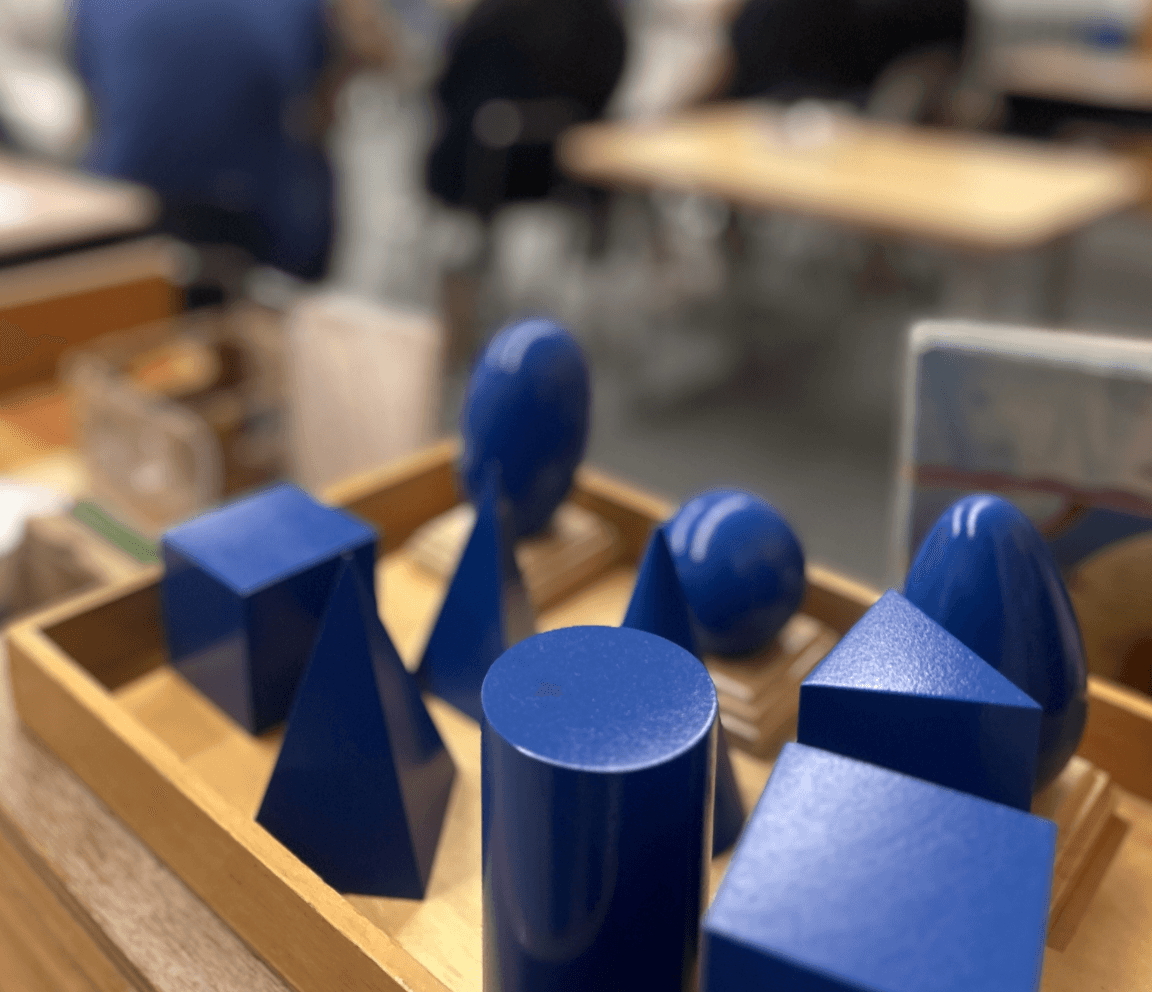
Montessori materials are tactile and self-correcting, letting children discover concepts independently. They guide students from concrete, hands-on exploration toward abstract understanding at their own pace.
What is a prepared environment?
Our classrooms offer what we call choice within structure — a carefully organized space where children choose their own work from a defined set of options. This structure builds concentration, critical thinking, problem-solving, and self-directed learning.
How does Casa di Mir foster a love of learning?
Children pursue their own curiosity and goals within clear boundaries. Guides observe closely, introduce new concepts at the right moment, and guide students toward their own discoveries - creating genuine moments of insight rather than simply delivering information.
What is "grace and courtesy" in the Montessori classroom?
Grace and courtesy are foundational to our community: compassion and respect are expected of every member, woven into daily classroom life and reinforced through service-learning and peace education, so children learn to value diversity and contribute to a more inclusive, equitable world.
Is Montessori academically rigorous?
Yes. Hands-on materials build deep understanding, not just coverage, and because students progress at their own pace, they move ahead as soon as they’re ready rather than waiting on a group schedule. Our multi-year classroom cycles reinforce skills over time, so children graduate with strong academic foundations along with independence and a lasting love of learning.
How are families involoved in the life of the school?
Family involvement is woven into daily life at Casa. Parents volunteer in classrooms and at school events, join committees and the Casa Annual Fund giving campaign, and contribute their time, skills, and support in whatever way fits their family. Because our community spans generations of Casa di Mir families, this involvement also builds the kind of lasting relationships that keep our school feeling like an extended family rather than just a place children attend.
Is Montessori a good fit for children with learning differences?
Montessori’s self-paced, hands-on approach can be a strong fit for many children with learning differences. The right fit depends on the specific child and need - we encourage families to talk with our admissions team and our guides about their child’s individual profile so we can discuss whether our program and resources are the right match.
Ready to see it for yourself?
The best way to understand Casa di Mir is to walk through our doors. Schedule a tour and experience our Montessori community firsthand.
Ready to see it for yourself?
The best way to understand Casa di Mir is to walk through our doors. Schedule a tour and experience our Montessori community firsthand.
Montessori FAQs
How is Montessori different from a traditional school?
Montessori children learn through hands-on exploration rather than passive listening. They move at their own pace, choosing from a wide range of activities and working individually or in small groups with materials introduced one-on-one by a guide who knows what each child is ready for. This freedom builds concentration, motivation, and a genuine love of learning.
After age six, students take on independent research, field trips, interviews, and group projects - presentations, art, music, science - guided by our curriculum framework and supported by textbooks, but with far more flexibility and student choice than a traditional classroom. Children consistently meet or exceed traditional academic benchmarks, working efficiently and enjoying it. Much of the learning happens peer-to-peer, through sharing and inspiring one another rather than competing.
Why are the classrooms mixed aged?
Our classrooms group children across a multi-year age span, so each child experiences being the youngest, the middle, and eventually the oldest in the room. Older students reinforce their own learning by teaching younger peers, and the mix builds empathy, leadership, and lasting peer bonds.
What role do hands on materials play?
Montessori materials are tactile and self-correcting, letting children discover concepts independently. They guide students from concrete, hands-on exploration toward abstract understanding at their own pace.
What is a prepared environment?
Our classrooms offer what we call choice within structure — a carefully organized space where children choose their own work from a defined set of options. This structure builds concentration, critical thinking, problem-solving, and self-directed learning.
How does Casa di Mir foster a love of learning?
Children pursue their own curiosity and goals within clear boundaries. Guides observe closely, introduce new concepts at the right moment, and guide students toward their own discoveries - creating genuine moments of insight rather than simply delivering information.
What is "grace and courtesy" in the Montessori classroom?
Grace and courtesy are foundational to our community: compassion and respect are expected of every member, woven into daily classroom life and reinforced through service-learning and peace education, so children learn to value diversity and contribute to a more inclusive, equitable world.
Is Montessori academically rigorous?
Yes. Hands-on materials build deep understanding, not just coverage, and because students progress at their own pace, they move ahead as soon as they’re ready rather than waiting on a group schedule. Our multi-year classroom cycles reinforce skills over time, so children graduate with strong academic foundations along with independence and a lasting love of learning.
How are families involoved in the life of the school?
Family involvement is woven into daily life at Casa. Parents volunteer in classrooms and at school events, join committees and the Casa Annual Fund giving campaign, and contribute their time, skills, and support in whatever way fits their family. Because our community spans generations of Casa di Mir families, this involvement also builds the kind of lasting relationships that keep our school feeling like an extended family rather than just a place children attend.
Is Montessori a good fit for children with learning differences?
Montessori’s self-paced, hands-on approach can be a strong fit for many children with learning differences. The right fit depends on the specific child and need - we encourage families to talk with our admissions team and our guides about their child’s individual profile so we can discuss whether our program and resources are the right match.
Ready to see it for yourself?
The best way to understand Casa di Mir is to walk through our doors. Schedule a tour and experience our Montessori community firsthand.
Ready to see it for yourself?
The best way to understand Casa di Mir is to walk through our doors. Schedule a tour and experience our Montessori community firsthand.
Montessori FAQs
How is Montessori different from a traditional school?
Montessori children learn through hands-on exploration rather than passive listening. They move at their own pace, choosing from a wide range of activities and working individually or in small groups with materials introduced one-on-one by a guide who knows what each child is ready for. This freedom builds concentration, motivation, and a genuine love of learning.
After age six, students take on independent research, field trips, interviews, and group projects - presentations, art, music, science - guided by our curriculum framework and supported by textbooks, but with far more flexibility and student choice than a traditional classroom. Children consistently meet or exceed traditional academic benchmarks, working efficiently and enjoying it. Much of the learning happens peer-to-peer, through sharing and inspiring one another rather than competing.
Why are the classrooms mixed aged?
Our classrooms group children across a multi-year age span, so each child experiences being the youngest, the middle, and eventually the oldest in the room. Older students reinforce their own learning by teaching younger peers, and the mix builds empathy, leadership, and lasting peer bonds.
What role do hands on materials play?
Montessori materials are tactile and self-correcting, letting children discover concepts independently. They guide students from concrete, hands-on exploration toward abstract understanding at their own pace.
What is a prepared environment?
Our classrooms offer what we call choice within structure — a carefully organized space where children choose their own work from a defined set of options. This structure builds concentration, critical thinking, problem-solving, and self-directed learning.
How does Casa di Mir foster a love of learning?
Children pursue their own curiosity and goals within clear boundaries. Guides observe closely, introduce new concepts at the right moment, and guide students toward their own discoveries - creating genuine moments of insight rather than simply delivering information.
Why are classrooms mixed age?
Grace and courtesy are foundational to our community: compassion and respect are expected of every member, woven into daily classroom life and reinforced through service-learning and peace education, so children learn to value diversity and contribute to a more inclusive, equitable world.
Is Montessori academically rigorous?
Yes. Hands-on materials build deep understanding, not just coverage, and because students progress at their own pace, they move ahead as soon as they’re ready rather than waiting on a group schedule. Our multi-year classroom cycles reinforce skills over time, so children graduate with strong academic foundations along with independence and a lasting love of learning.
How are families involoved in the life of the school?
Family involvement is woven into daily life at Casa. Parents volunteer in classrooms and at school events, join committees and the Casa Annual Fund giving campaign, and contribute their time, skills, and support in whatever way fits their family. Because our community spans generations of Casa di Mir families, this involvement also builds the kind of lasting relationships that keep our school feeling like an extended family rather than just a place children attend.
Is Montessori a good fit for children with learning differences?
Montessori’s self-paced, hands-on approach can be a strong fit for many children with learning differences. The right fit depends on the specific child and need - we encourage families to talk with our admissions team and our guides about their child’s individual profile so we can discuss whether our program and resources are the right match.
Ready to see it for yourself?
The best way to understand Casa di Mir is to walk through our doors. Schedule a tour and experience our Montessori community firsthand.